
En Passant in Chess – The Rule, Real Examples, and Interactive Practice
En passant is a legal pawn capture that works only immediately after an enemy pawn moves two squares from its starting square and passes through a square your pawn attacks. Your pawn captures as if the enemy pawn had moved only one square.
En passant confuses many beginners because the captured pawn is not taken on the square where it finishes. That is why the move can feel strange at first. Once you remember the three key conditions — two-square pawn move, pawn beside it, and capture immediately — the rule becomes much easier to spot.
Is en passant legal?
Yes. It is an official chess rule and fully legal in tournament play.
When does it work?
Only right after the enemy pawn makes its two-square advance.
Who can do it?
Only a pawn can capture en passant, and both White and Black can do it.
Can you practise it?
Yes — use the practice positions and real game replays below.
Step-by-step example with diagrams
Pawns usually capture one square diagonally. En passant is the special exception that stops a pawn from “slipping past” an enemy pawn by using its two-square first move.
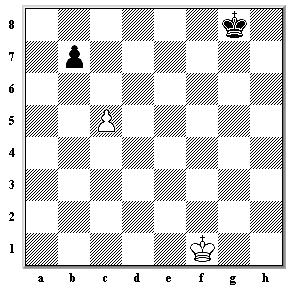
Now the pawn advances two squares from its starting square and lands beside the enemy pawn.
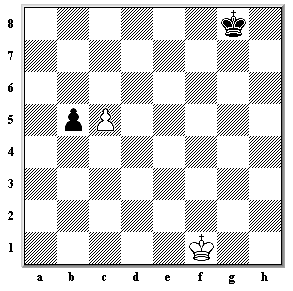
The opposing pawn may now capture as if the pawn had moved only one square.
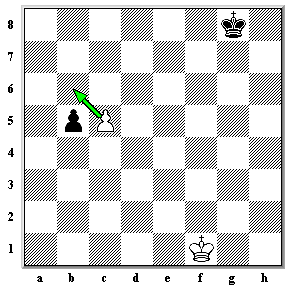
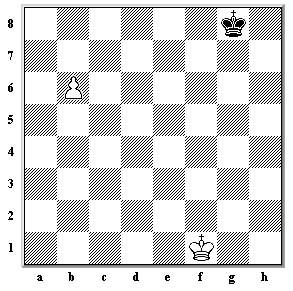
After the capture, the capturing pawn lands on the square the enemy pawn passed over, and the enemy pawn is removed.
Interactive en passant practice
These practice positions let you play the moment yourself. The first training position auto-loads on the page. Switch positions in the dropdown and the board updates automatically.
White to move: 38.dxc6+ is the en passant capture, and it wins Black’s queen.
Watch real games where en passant mattered
En passant is rare enough to be memorable, but it is not a gimmick. Here are real games where it mattered in practical play.
Petrov vs Hoffmann, 1853
White plays 38.dxc6+ en passant and wins Black’s queen.
Steinitz vs Elson, 1883
White uses the earliest possible en passant on move 3: 3.exd6 e.p.
Anand vs Mamedyarov, 2019
Black replies with 18...exf3 en passant in a modern elite game.
Gundersen vs Faul, 1928
A famous curiosity: 15.hxg6 e.p.# delivers en passant mate.
Why en passant exists
En passant prevents a pawn from escaping a normal diagonal capture merely by using the two-square first move. Without the rule, a pawn could sometimes bypass pressure in an artificial way. The rule keeps pawn play fair and consistent.
Understanding the rule
What is en passant in chess?
En passant is a special pawn capture that can occur immediately after an opposing pawn moves two squares forward from its starting position. The rule exists to prevent a pawn from bypassing a capture that would have been possible if it had moved only one square. Use the practice board above to play the capture yourself and see exactly how the pawn is removed.
What does en passant mean?
En passant means “in passing” in French and describes capturing a pawn as it passes through a square. The name reflects the idea that the pawn is taken during its movement rather than on its final square. Use the diagrams above to see how the capture happens in motion.
Why does en passant exist?
En passant exists to prevent a pawn from avoiding capture by jumping two squares forward. When the two-square pawn move was introduced, this rule was added to keep pawn interactions fair. Use the example diagrams to see how it stops a pawn escaping pressure.
Is en passant a real rule?
Yes, en passant is an official rule used in all standard chess games. It is recognised in both casual play and formal tournament rules. Try the replay examples above to see it happen in real games.
Is en passant still legal?
Yes, en passant remains a fully legal rule in modern chess. It is included in FIDE rules and used in both online and over-the-board play. Watch the game examples above to see it used at different levels.
Timing and legality
Can you only play en passant immediately?
Yes, en passant must be played on the very next move after the pawn advances two squares. This rule ensures the capture reflects the pawn’s movement through the attacked square. Use the trainer above to see how the opportunity disappears if you wait.
What happens if you miss en passant?
If you do not capture en passant immediately, the opportunity is lost forever. This is because the rule only applies to the position created on that exact move. Try different move orders in the practice board to see the effect.
Is en passant mandatory?
No, en passant is optional even when it is available. Like any capture, it should only be played if it improves your position. Use the examples above to compare positions where it is good or bad.
Why can’t I take en passant?
You usually cannot take en passant because one of the required conditions is missing. The pawn must have just moved two squares, your pawn must be beside it, and you must capture immediately. Use the practice positions to learn to spot all conditions together.
Can you en passant after one move delay?
No, en passant cannot be played after a delay. The right disappears as soon as any other move is made. Use the trainer above to test how quickly the opportunity expires.
Pieces and movement
Which pieces can do en passant?
Only pawns can perform en passant captures in chess. No other piece is allowed to use this rule. Use the board above to see how only pawn movement creates this situation.
Can black do en passant?
Yes, both sides can perform en passant under the same conditions. The rule applies equally to White and Black. Try switching sides in the practice tool to see both cases.
Can a king capture en passant?
No, only pawns can capture en passant in chess. The king and other pieces must follow their normal capture rules. Use the examples above to reinforce this restriction.
Can any pawn do en passant?
No, only a pawn that is already next to the advancing pawn can capture en passant. The positioning must be exact for the rule to apply. Use the diagrams to understand how placement controls legality.
Strategy and practical play
Do players actually use en passant?
Yes, en passant is used in real games, including at master level. Although rare, it appears whenever the position allows it. Watch the replay section above to see real examples.
How often does en passant happen?
En passant is relatively rare in practical games compared to normal captures. However, the threat of en passant influences pawn decisions much more often. Use the practice board to see how it affects planning.
Is en passant a good move?
En passant can be a strong move if it improves your position or creates tactical chances. Like any capture, it should be judged based on the resulting position. Try different choices in the trainer to compare outcomes.
Can en passant be a blunder?
Yes, en passant can be a mistake if it opens lines or weakens your position. Sometimes declining the capture is the stronger move. Use the examples above to compare both choices.
Tactics and edge cases
Can en passant give check?
Yes, en passant can give check by opening lines or uncovering attacks. Because the captured pawn is removed from a different square, it can create unexpected tactical effects. Watch the replay examples to see this happen.
Can en passant deliver checkmate?
Yes, en passant can deliver checkmate in rare positions. This happens when the capture opens a decisive attacking line. Use the famous example above to see this unusual finish.
Can en passant open lines?
Yes, en passant can open files or diagonals by removing a blocking pawn. This can create immediate tactical threats. Watch the game examples to see how lines suddenly open.
Can en passant happen more than once?
Yes, multiple en passant captures can occur in a single game if the positions arise. Each opportunity depends on a new two-square pawn move. Use the trainer to explore different scenarios.
Common confusion and myths
Is en passant cheating?
No, en passant is a fully legal rule in chess. It only feels strange because the capture happens differently from normal moves. Use the diagrams above to understand the logic.
Why does en passant feel illegal?
En passant feels illegal because the captured pawn is removed from a square it did not end on. This breaks the usual visual pattern of captures. Use the step-by-step diagrams to make it clear.
Is en passant forced?
No, en passant is never forced in standard chess. You always have the choice whether to capture or not. Use the practice board to test both decisions.
Why do beginners struggle with en passant?
Beginners struggle with en passant because it breaks normal capture patterns. The rule also depends on timing and positioning at the same time. Use the trainer above to build recognition through repetition.
Advanced understanding
Can en passant change pawn structure?
Yes, en passant can significantly change pawn structure by removing central pawns. This can affect long-term plans and control of key squares. Use the practice board to explore different structural outcomes.
Can en passant affect evaluation?
Yes, en passant can change the evaluation of a position by opening lines or removing key pawns. Engines often adjust their evaluation sharply after such captures. Use the examples above to see practical effects.
Why is en passant only for pawns?
En passant is limited to pawns because it was designed specifically to balance pawn movement rules. Other pieces do not have the same two-square movement issue. Use the diagrams to understand the logic behind this restriction.
Can en passant save a lost position?
Yes, en passant can sometimes save a position by creating counterplay or removing a key pawn. Although rare, it can change the course of a game. Watch the replay examples to see dramatic moments.